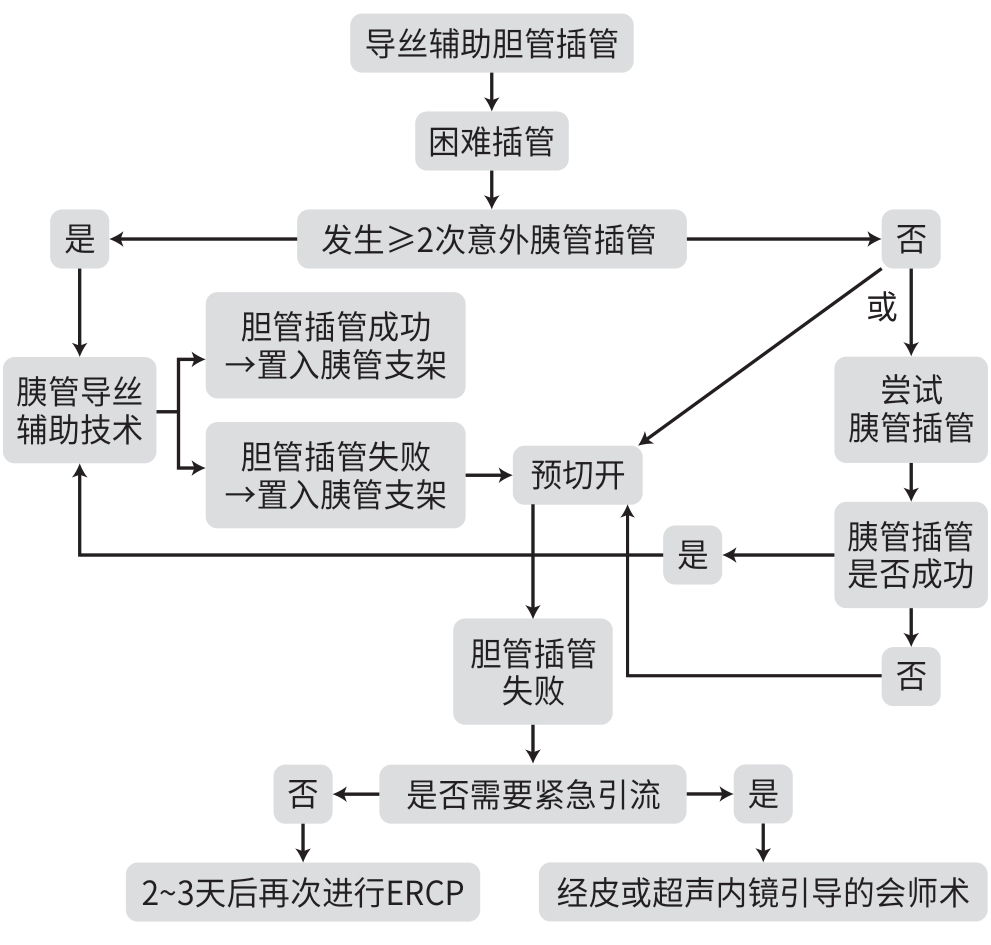
There is still a lack of guidelines on biliary cannulation in recent years. The guidelines are an initiative of the World Endoscopy Organization (WEO) formulated by a panel of experts from Asia, Europe, and America. Through a systematic literature review and the application of the Grading of Recommendations Assessment, Development, and Evaluation methodology, the guidelines address clinical questions pertaining to four key domains, i.e., prevention of post-ERCP pancreatitis (PEP), bile duct cannulation techniques, sphincterotomy/papillary balloon dilation, and bile duct cannulation under special circumstances. Successful biliary cannulation and sphincterotomy are cornerstones of ERCP and are indispensable for almost all therapeutic and advanced diagnostic procedures; however, adverse events, especially PEP, may occur frequently and affect the prognosis of patients. A high success rate of bile duct cannulation and a low incidence rate of PEP are quality indicators for ERCP and should be the goal of all endoscopists. The guidelines aim to provide clinical practice recommendations applicable worldwide, regardless of resources and expertise. The guidelines cover the preoperative, intraoperative, and postoperative management of ERCP, including the measures to reduce the risk of PEP, the technique for an initial biliary cannulation attempt, options for cannulation in case of difficult biliary access, alternatives to ERCP in case of failure (under the guidance of percutaneous and endoscopic ultrasound), and biliary access in altered anatomy (periampullary diverticulum and postsurgical anatomy) and in the presence of duodenal stenosis.










 DownLoad: