PDF下载 ( 7890 KB)

基于蛋白质组孟德尔随机化的代谢相关脂肪性肝病因果蛋白鉴定及体外验证
DOI: 10.12449/JCH260911
Identification and in vitro validation of causative proteins in metabolic dysfunction-associated fatty liver disease: A study based on proteome-wide Mendelian randomization
-
摘要:
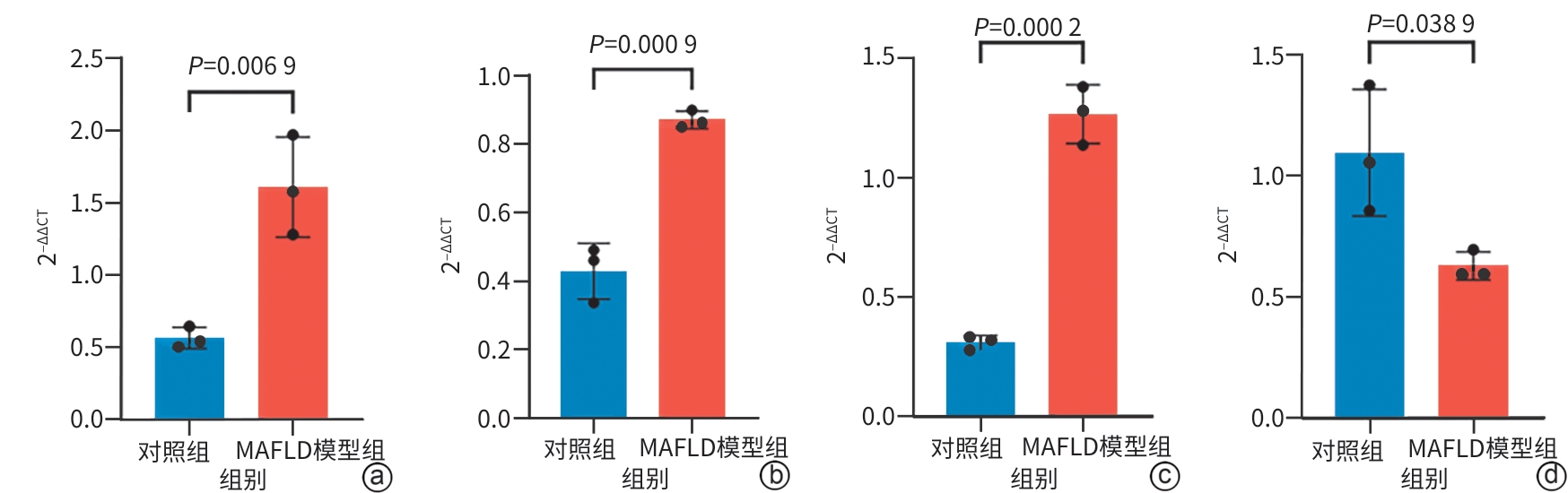
目的 通过整合多组学分析方法,识别与代谢相关脂肪性肝病(MAFLD)相关的蛋白质生物标志物及潜在治疗靶点。 方法 整合大规模血浆蛋白质定量性状位点数据与MAFLD全基因组关联研究数据,开展蛋白质组范围的孟德尔随机化分析。采用基于汇总数据的孟德尔随机化(SMR)/依赖工具变量的异质性(HEIDI)检验及共定位分析评估显著性蛋白。计量资料方差齐时两组间比较采用独立样本t检验;方差不齐时采用Welch校正t检验。转录组验证结果与孟德尔随机化分析比对基因表达变化趋势,采用箱线图展示候选基因组间表达分布。 结果 在分析的7 130种蛋白质中,40种与MAFLD存在因果关联(26种风险增加,14种保护性)(FDR<0.05)。其中9种蛋白经SMR/HEIDI检验支持(PSMR<0.05,PHEIDI>0.05),14种显示强共定位信号(PPH4>0.9)。转录组分析发现,二磷酸腺苷核糖基化因子样GTPase 2、胰岛素样生长因子结合蛋白2、酪蛋白激酶1δ(CSNK1D)、亮氨酸富重复神经元1和膜突蛋白(MSN)共5种蛋白存在显著差异表达(P值均<0.05)。体外验证显示,MAFLD细胞模型中MSN(1.612±0.346 vs 0.569±0.077)、14-3-3蛋白θ(YWHAQ)(1.267±0.126 vs 0.313±0.029)和CSNK1D表达上调(0.871±0.025 vs 0.431±0.080),组蛋白脱乙酰酶8表达下调(0.637±0.059 vs 1.097±0.260)(P值均<0.05)。功能注释表明,CSNK1D参与昼夜节律与代谢调控,YWHAQ调控Hippo通路与脂质信号传导,而MSN与细胞骨架重塑及纤维化反应相关。 结论 本研究通过整合蛋白质基因组学分析,揭示CSNK1D、YWHAQ和MSN可能是MAFLD发病机制中的关键介导因子。这些蛋白有望作为新型生物标志物及治疗靶点,为疾病机制研究与干预策略开发提供新方向。 Abstract:Objective To identify protein biomarkers and potential therapeutic targets associated with metabolic dysfunction-associated fatty liver disease (MAFLD) through an integrative multi-omics analysis. Methods Large-scale plasma protein quantitative trait locus data were integrated with MAFLD genome-wide association study data, and a proteome-wide Mendelian randomization analysis was performed. Summary data-based Mendelian Randomization (SMR)/heterogeneity in dependent instruments (HEIDI) test and colocalization analysis were used to assess significant proteins. The independent samples t-test was used for comparison of continuous data with homogeneity of variance between two groups, and the Welch-corrected t-test was used for comparison of continuous data with heterogeneity of variance. The transcriptomic validation results were compared with the Mendelian randomization results to evaluate the changing trends of gene expression, and boxplots were used to display the expression distribution of candidate genes between groups. Results Among 7 130 proteins analyzed, 40 showed a causal relationship with MAFLD, among which 26 increased the risk of MAFLD and 14 exerted a protective effect against MAFLD (FDR<0.05). Nine proteins were supported by SMR/HEIDI (PSMR<0.05, PHEIDI>0.05), and 14 showed a strong colocalization signal (PPH4>0.9). The transcriptomic analysis identified 5 differentially expressed proteins (all P<0.05), i.e., adenosine diphosphate-ribosylation factor-like GTPase 2, insulin-like growth factor binding protein 2, casein kinase 1 delta (CSNK1D), leucine-rich repeat neuronal 1, and moesin (MSN). In vitro validation showed upregulated expression levels of MSN (1.612±0.346 vs 0.569±0.077, P<0.05), 14-3-3 protein theta (YWHAQ) (1.267±0.126 vs 0.313±0.029, P<0.05), and CSNK1D (0.871±0.025 vs 0.431±0.080, P<0.05) and a downregulated expression level of histone deacetylase 8 (0.637±0.059 vs 1.097±0.260, P<0.05) in the MAFLD cell model. Functional annotation showed that CSNK1D participated in circadian and metabolic regulation, YWHAQ modulated the Hippo pathway and lipid signal transduction, and MSN was associated with cytoskeletal remodeling and fibrogenic responses. Conclusion The integrative proteogenomic analysis in this study shows that CSNK1D, YWHAQ, and MSN may be key mediators in the pathogenesis of MAFLD. These proteins have the potential to serve as novel biomarkers and therapeutic targets, providing new directions for research on disease mechanisms and the development of intervention strategies. -
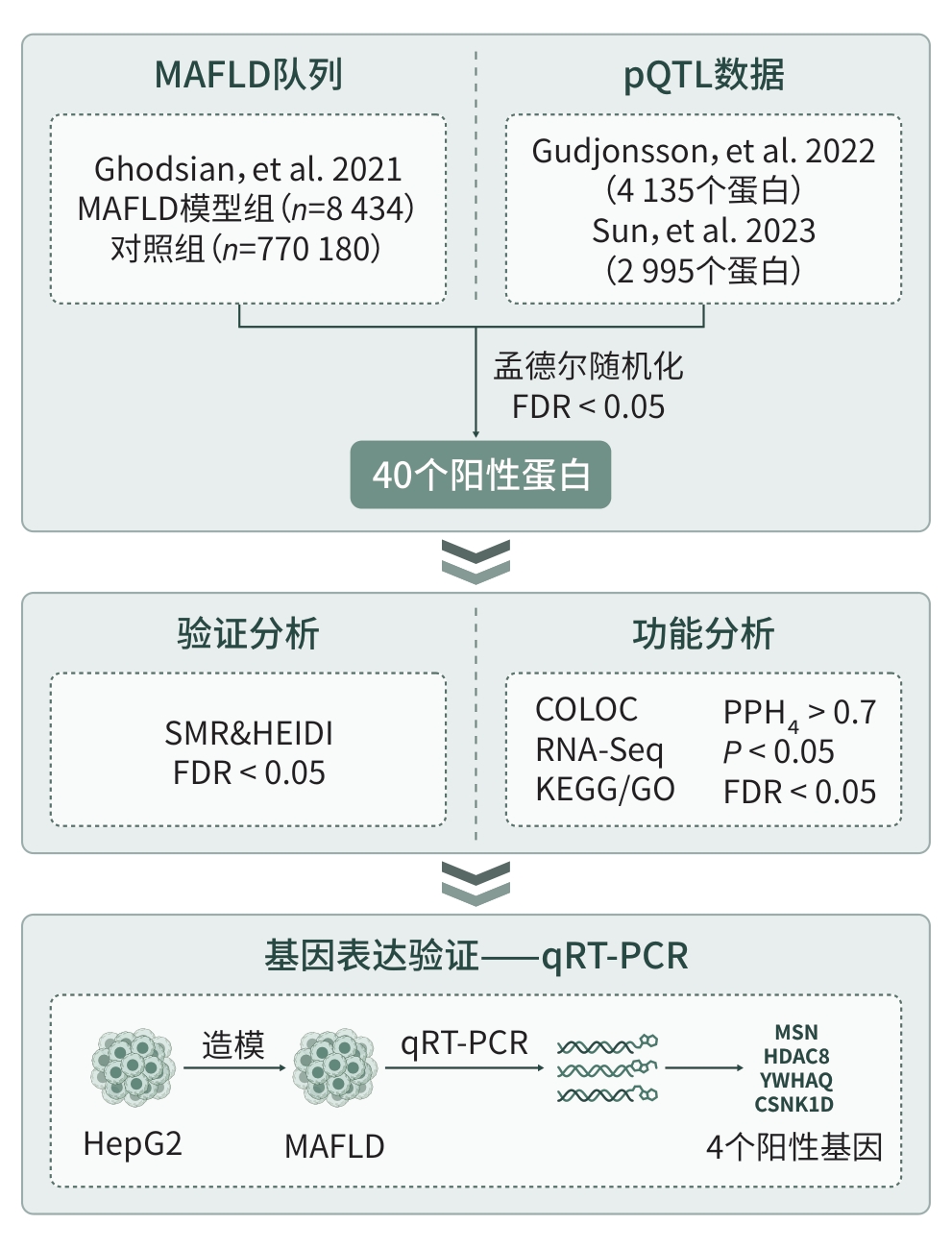
注: MAFLD,代谢相关脂肪性肝病;pQTL,蛋白质定量性状位点;FDR,错误发现率;SMR,基于汇总数据的孟德尔随机化;HEIDI,依赖工具变量的异质性;COLOC,共定位分析;PPH4,假设4的后验概率;RNA-Seq,RNA测序;KEGG,京都基因与基因组百科全书;GO,基因本体;HepG2,人类肝癌细胞系;qRT-PCR,定量逆转录聚合酶链式反应。
图 1 整体研究设计的流程图
Figure 1. Flowchart of the overall research design

注: 森林图展示了遗传预测的蛋白质水平与MAFLD风险之间关联的OR值及95%置信区间。图中指出了用于MR估计所采用的统计方法(Wald ratio或Inverse Variance weighted)以及工具SNP的数量。PPH4值表示pQTL与MAFLD数据信号共定位的后验概率,而SMR和HEIDI检验分别评估了多效性和异质性。具有高共定位概率(PPH4>0.9)且HEIDI结果不显著(HEIDI>0.05)的蛋白质被认为是稳健的因果候选因子(Tier 1),包括HDAC8、MSN、YWHAQ、NDE1、LRRN1、CCN6 6种蛋白。MAFLD,代谢相关脂肪性肝病;MR,孟德尔随机化;SNP,单核苷酸多态性;OR,比值比;pQTL,蛋白质定量性状位点;HEIDI,依赖工具变量的异质性;SMR,基于汇总数据的孟德尔随机化;HDAC8,组蛋白脱乙酰酶8;MSN,膜突蛋白;YWHAQ,14-3-3蛋白θ;NDE1,神经发育蛋白1;LRRN1,富亮氨酸重复神经元1;CCN6,细胞通信网络因子6。
图 2 蛋白质与MAFLD之间关联的森林图
Figure 2. Forest plot depicting the association between proteins and MAFLD
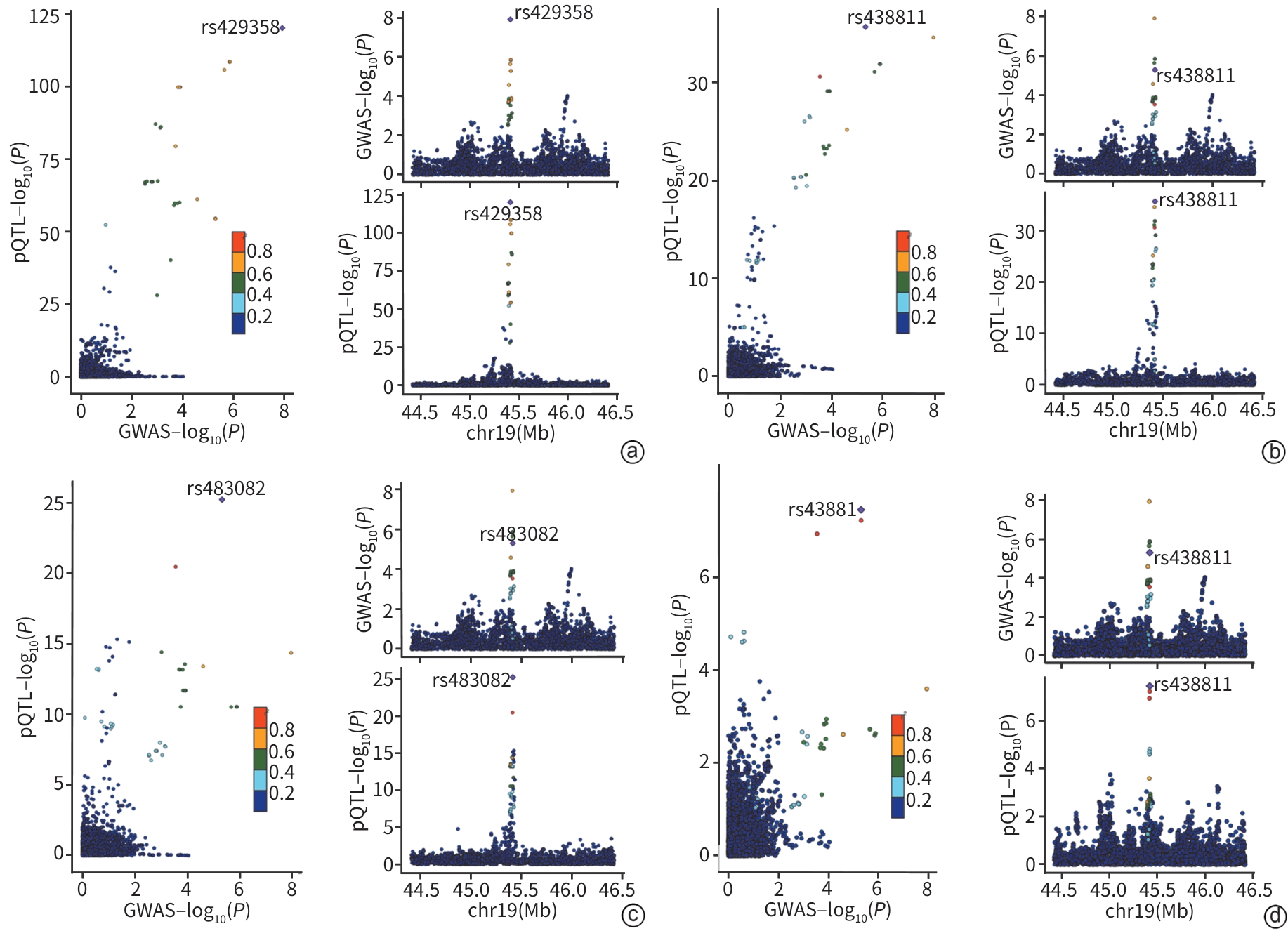
注: a,MSN;b,YWHAQ;c,HDAC8;d,CSNK1D。散点图展示了4个候选蛋白在其顺式pQTL区域(±500 kb)内,MAFLD的GWAS信号与蛋白质水平关联信号的共定位分析结果。横轴表示基因组位置,纵轴表示-log10(P)值,颜色代表各SNP与区域内主导SNP的连锁不平衡程度。pQTL,蛋白质定量性状位点;SNP,单核苷酸多态性;MAFLD,代谢相关脂肪性肝病;GWAS,全基因组关联研究;MSN,膜突蛋白;YWHAQ,14-3-3蛋白θ;HDAC8,组蛋白脱乙酰酶8;CSNK1D,酪蛋白激酶1δ。
图 3 4个候选蛋白的共定位分析
Figure 3. Co-localization analysis of four candidate proteins
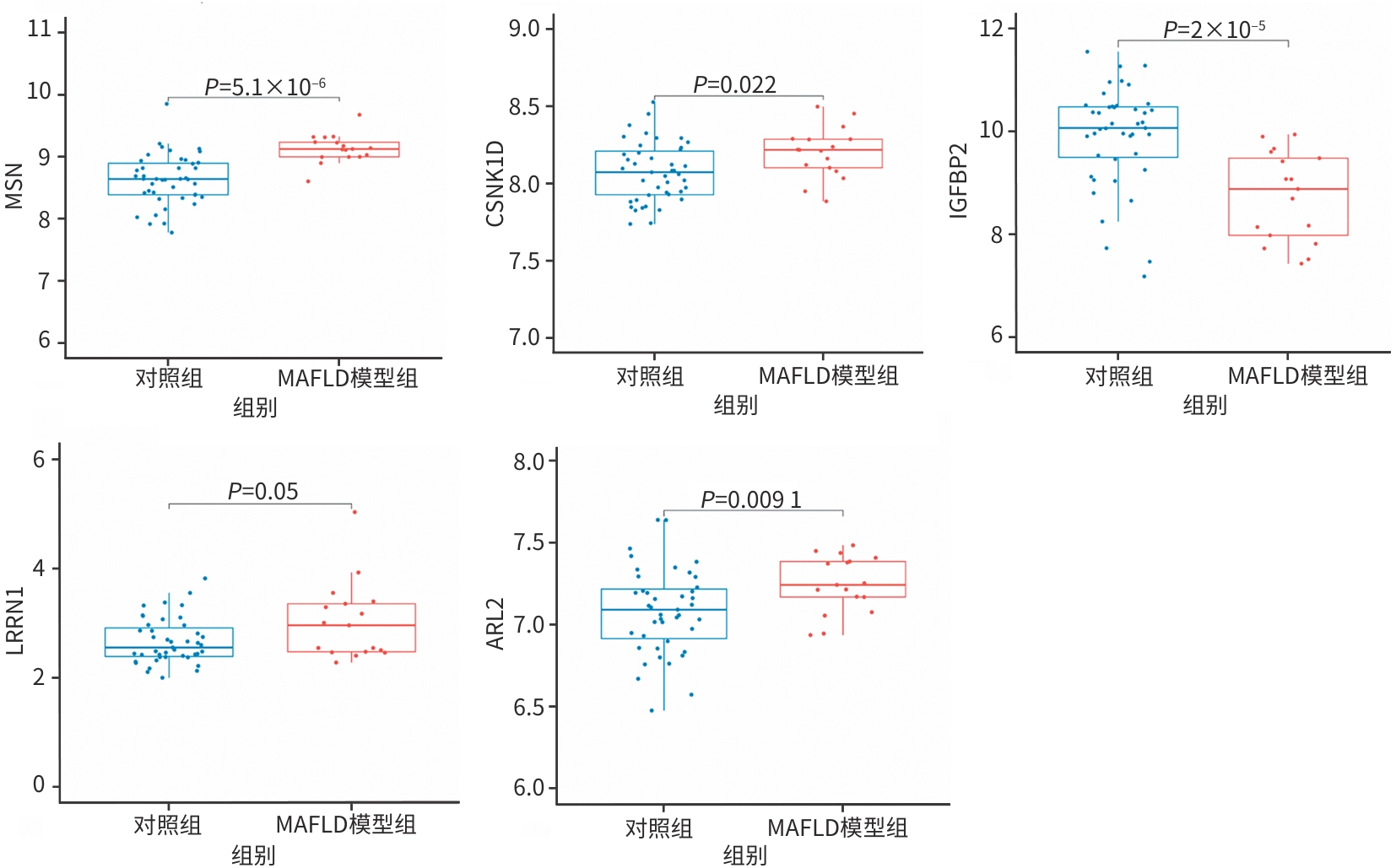
注: 箱线图展示了4种经MR鉴定的蛋白质在MAFLD模型组(蓝色)与对照组(红色)之间的差异表达情况。箱线图中X轴为分组,Y轴为Log2FC值(标准化基因表达量),通过比较MAFLD组与对照组肝组织中mRNA表达水平的中位数,若MAFLD组高于对照组则判定为显著上调,反之则为显著下调。MSN,膜突蛋白;CSNK1D,酪蛋白激酶1δ;IGFBP2,胰岛素样生长因子结合蛋白2;LRRN1,亮氨酸富重复神经元1;ARL2,二磷酸腺苷核糖基化因子样GTPase 2;MR,孟德尔随机化;MAFLD,代谢相关脂肪性肝病。
图 4 蛋白质在MAFLD中的转录组学验证
Figure 4. Transcriptomic validation of proteins in MAFLD
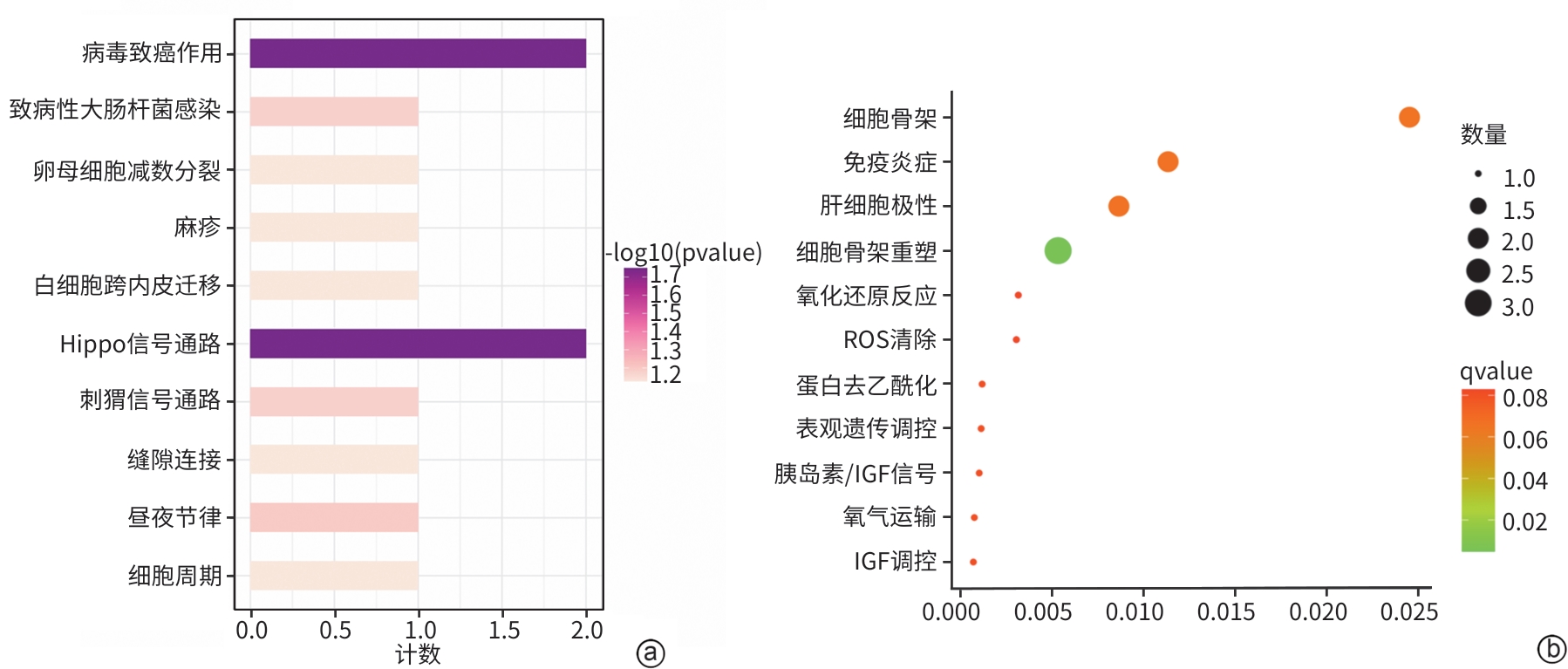
注: a,14个靶基因的KEGG通路富集结果;b,GO功能富集分析结果,其中X轴为GeneRatio值,Y轴为通路名称,qvalue值为经多重检验校正的pvalue值。KEGG,京都基因与基因组百科全书;GO,基因本体;ROS,活性氧;IGF,胰岛素样生长因子。
图 5 KEGG通路富集和GO功能富集分析
Figure 5. KEGG pathway enrichment and GO functional enrichment analysis
-
[1] Lazarus J V, Newsome P N, Francque S M, et al. Reply: A multi-society Delphi consensus statement on new fatty liver disease nomenclature[J]. Hepatology, 2024, 79( 3): E93- E94. DOI: 10.1097/HEP.0000000000000696. [2] Younossi Z, Anstee Q M, Marietti M, et al. Global burden of NAFLD and NASH: Trends, predictions, risk factors and prevention[J]. Nat Rev Gastroenterol Hepatol, 2018, 15( 1): 11- 20. DOI: 10.1038/nrgastro.2017.109. [3] Estes C, Razavi H, Loomba R, et al. Modeling the epidemic of nonalcoholic fatty liver disease demonstrates an exponential increase in burden of disease[J]. Hepatology, 2018, 67( 1): 123- 133. DOI: 10.1002/hep.29466. [4] Wei S L, Wang L, Evans P C, et al. NAFLD and NASH: Etiology, targets and emerging therapies[J]. Drug Discov Today, 2024, 29( 3): 103910. DOI: 10.1016/j.drudis.2024.103910. [5] Powell E E, Wong V W, Rinella M. Non-alcoholic fatty liver disease[J]. Lancet, 2021, 397( 10290): 2212- 2224. DOI: 10.1016/S0140-6736(20)32511-3. [6] Friedman S L, Neuschwander-Tetri B A, Rinella M, et al. Mechanisms of NAFLD development and therapeutic strategies[J]. Nat Med, 2018, 24( 7): 908- 922. DOI: 10.1038/s41591-018-0104-9. [7] Suhre K, Arnold M, Bhagwat A M, et al. Connecting genetic risk to disease end points through the human blood plasma proteome[J]. Nat Commun, 2017, 8: 14357. DOI: 10.1038/ncomms14357. [8] Sveinbjornsson G, Ulfarsson M O, Thorolfsdottir R B, et al. Multiomics study of nonalcoholic fatty liver disease[J]. Nat Genet, 2022, 54( 11): 1652- 1663. DOI: 10.1038/s41588-022-01199-5. [9] Zhao J H, Stacey D, Eriksson N, et al. Genetics of circulating inflammatory proteins identifies drivers of immune-mediated disease risk and therapeutic targets[J]. Nat Immunol, 2023, 24( 9): 1540- 1551. DOI: 10.1038/s41590-023-01588-w. [10] Thomas D C, Conti D V. Commentary: The concept of‘Mendelian randomization’[J]. Int J Epidemiol, 2004, 33( 1): 21- 25. DOI: 10.1093/ije/dyh048. [11] Sun X Y, Chen B H, Qi Y, et al. Multi-omics Mendelian randomization integrating GWAS, eQTL and pQTL data revealed GSTM4 as a potential drug target for migraine[J]. J Headache Pain, 2024, 25( 1): 117. DOI: 10.1186/s10194-024-01828-w. [12] Ghodsian N, Abner E, Emdin C A, et al. Electronic health record-based genome-wide meta-analysis provides insights on the genetic architecture of non-alcoholic fatty liver disease[J]. Cell Rep Med, 2021, 2( 11): 100437. DOI: 10.1016/j.xcrm.2021.100437. [13] Namjou B, Lingren T, Huang Y B, et al. GWAS and enrichment analyses of non-alcoholic fatty liver disease identify new trait-associated genes and pathways across eMERGE Network[J]. BMC Med, 2019, 17( 1): 135. DOI: 10.1186/s12916-019-1364-z. [14] Gudjonsson A, Gudmundsdottir V, Axelsson G T, et al. A genome-wide association study of serum proteins reveals shared loci with common diseases[J]. Nat Commun, 2022, 13( 1): 480. DOI: 10.1038/s41467-021-27850-z. [15] Sun B B, Chiou J, Traylor M, et al. Plasma proteomic associations with genetics and health in the UK Biobank[J]. Nature, 2023, 622( 7982): 329- 338. DOI: 10.1038/s41586-023-06592-6. [16] Zhang J N, Dutta D, Köttgen A, et al. Plasma proteome analyses in individuals of European and African ancestry identify cis-pQTLs and models for proteome-wide association studies[J]. Nat Genet, 2022, 54( 5): 593- 602. DOI: 10.1038/s41588-022-01051-w. [17] Narula S, Yusuf S, Chong M, et al. Plasma ACE2 and risk of death or cardiometabolic diseases: A case-cohort analysis[J]. Lancet, 2020, 396( 10256): 968- 976. DOI: 10.1016/S0140-6736(20)31964-4. [18] Sadler M C, Auwerx C, Lepik K, et al. Quantifying the role of transcript levels in mediating DNA methylation effects on complex traits and diseases[J]. Nat Commun, 2022, 13( 1): 7559. DOI: 10.1038/s41467-022-35196-3. [19] Wallace C. A more accurate method for colocalisation analysis allowing for multiple causal variants[J]. PLoS Genet, 2021, 17( 9): e1009440. DOI: 10.1371/journal.pgen.1009440. [20] Wu T Z, Hu E Q, Xu S B, et al. clusterProfiler 4.0: A universal enrichment tool for interpreting omics data[J]. Innovation(Camb), 2021, 2( 3): 100141. DOI: 10.1016/j.xinn.2021.100141. [21] Lu Y X, Peng Q, Liu B Z, et al. SIRT5 affects lipid accumulation in cells of a metabolic-associated fatty liver disease model by regulating the succinylation status of HSPD1[J]. BMC Immunol, 2025, 26( 1): 95. DOI: 10.1186/s12865-025-00776-7. [22] Mendizabal I, Berto S, Usui N, et al. Cell type-specific epigenetic links to schizophrenia risk in the brain[J]. Genome Biol, 2019, 20( 1): 135. DOI: 10.1186/s13059-019-1747-7. [23] Vinje M A, Friedman D A. Exogenous spike-in mouse RNAs for accurate differential gene expression analysis in barley using RT-qPCR[J]. Biol Methods Protoc, 2023, 8( 1): bpad034. DOI: 10.1093/biomethods/bpad034. [24] Burger K L, Fernandez M R, Meads M B, et al. CK1δ and CK1ε signaling sustains mitochondrial metabolism and cell survival in multiple myeloma[J]. Cancer Res, 2023, 83( 23): 3901- 3919. DOI: 10.1158/0008-5472.CAN-22-2350. [25] Brookheart R T, Lee C Y, Espenshade P J. Casein kinase 1 regulates sterol regulatory element-binding protein(SREBP) to control sterol homeostasis[J]. J Biol Chem, 2014, 289( 5): 2725- 2735. DOI: 10.1074/jbc.M113.511899. [26] Kilpinen S, Heliölä H, Achim K. Range of chromatin accessibility configurations are permissive of GABAergic fate acquisition in developing mouse brain[J]. BMC Genomics, 2023, 24( 1): 725. DOI: 10.1186/s12864-023-09836-x. [27] Lin E, Kuo P H, Liu Y L, et al. Effects of circadian clock genes and health-related behavior on metabolic syndrome in a Taiwanese population: Evidence from association and interaction analysis[J]. PLoS One, 2017, 12( 3): e0173861. DOI: 10.1371/journal.pone.0173861. [28] Ou W B, Lundberg M Z, Zhu S H, et al. YWHAE-NUTM2 oncoprotein regulates proliferation and cyclin D1 via RAF/MAPK and Hippo pathways[J]. Oncogenesis, 2021, 10: 37. DOI: 10.1038/s41389-021-00327-w. [29] Xuan W, Song D D, Hou J H, et al. Regulation of Hippo-YAP1/TAZ pathway in metabolic dysfunction-associated steatotic liver disease[J]. Front Pharmacol, 2025, 16: 1505117. DOI: 10.3389/fphar.2025.1505117. [30] Kanai F, Marignani P A, Sarbassova D, et al. TAZ: A novel transcriptional co-activator regulated by interactions with 14-3-3 and PDZ domain proteins[J]. EMBO J, 2000, 19( 24): 6778- 6791. DOI: 10.1093/emboj/19.24.6778. [31] Gluchowski N L, Becuwe M, Walther T C, et al. Lipid droplets and liver disease: From basic biology to clinical implications[J]. Nat Rev Gastroenterol Hepatol, 2017, 14( 6): 343- 355. DOI: 10.1038/nrgastro.2017.32. [32] Karvar S, Ansa-Addo E A, Suda J, et al. Moesin, an ezrin/radixin/moesin family member, regulates hepatic fibrosis[J]. Hepatology, 2020, 72( 3): 1073- 1084. DOI: 10.1002/hep.31078. [33] Sun B K, Ding X Q, Tan J, et al. TM6SF2 E167K variant decreases PNPLA3-mediated PUFA transfer to promote hepatic steatosis and injury in MASLD[J]. Clin Mol Hepatol, 2024, 30( 4): 863- 882. DOI: 10.3350/cmh.2024.0268. [34] Hart S N, Li Y, Nakamoto K, et al. A comparison of whole genome gene expression profiles of HepaRG cells and HepG2 cells to primary human hepatocytes and human liver tissues[J]. Drug Metab Dispos, 2010, 38( 6): 988- 994. DOI: 10.1124/dmd.109.031831. -

 下载:
 本文二维码
计量
- 文章访问数: 12
- HTML全文浏览量: 9
- PDF下载量: 0
- 被引次数: 0