


第24届亚太地区肝脏研究协会年会(APASL 2014)于2014年3月12~15日在澳大利亚布里斯班召开。韩国延世大学医学院Kwang-Hyub Han教授在3月14日的研究生讲座上重点论述了肝细胞癌(HCC)的药物治疗现状以及目前亚太地区HCC领域所面临的挑战。
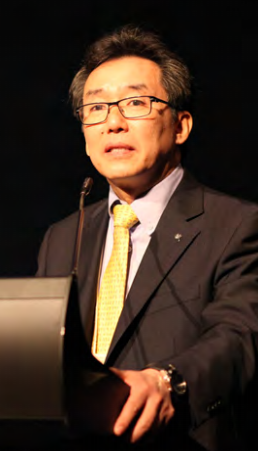
Kwang-Hyub Han教授
有数据显示亚太地区HCC患者占全球比例的75-80%。Sorafenib是晚期HCC药物治疗的首选,它不仅可以增加肿瘤细胞凋亡速率,还可靶向作用于肿瘤细胞增殖与血管生成,其安全性和有效性使世界各国HCC患者从中获益。尽管亚太地区肝癌的相关研究中受试者多为肝癌晚期患者,但SHAR和Asia-Pacific研究中OS、TTP、PFS风险比等数据并无显著差异。此外,sorafenib是首个肝癌系统治疗药物并为HCC患者的系统化治疗提供了新的参照标准。
Han教授指出尽管将sorafenib用于HCC治疗可使患者明显获益,但这对于亚太地区而言可能不太现实。原因之一便是出于财政预算方面的考虑,亚洲地区医保报销比例较低,大部分亚洲患者可能因无法负担高额医疗费用而放弃使用sorafenib治疗,另一个原因是sorafenib可引起腹泻及腹痛等副作用。
在HCC的治疗上,除了sorafenib之外是否有其他选择呢?我们可以关注晚期HCC的一些新型靶向治疗药物,如抗血管生成药物、表皮生长因子受体(EGFR)抑制剂、哺乳动物雷帕霉素靶蛋白(mTOR)以及丝裂原活化蛋白激酶激酶 (MEK)抑制剂等。Han教授最后指出“早期确诊是提高HCC生产率的最重要因素”。
原文阅读》》》Drug Therapy in HCC: Does Anything Work?
An astounding 75-80% of all cases of HCC worldwide occur in the Asia-Pacific region. Professor Kwang-Hyub Han addressed the question of how to manage HCC with drug therapy and outlined some of the current challenges of HCC in the Asia-Pacific region as part of the Postgraduate Course on Thursday.
One agent that is frequently mentioned as an option for treating advanced HCC is sorafenib. Sorafenib targets tumour cell proliferation and angiogenesis in addition to increasing the rate of apoptosis. Sorafenib has the benefit of being safe and efficacious in patients with HCC across geographic regions. Also, OS, TTP, and PFS hazard ratios were similar in the SHARP and Asia-Pacific studies, despite more advanced disease in the Asia-Pacific liver cancer study patients. Furthermore, sorafenib is the first systemic therapy and the new reference standard for systemic therapy of HCC patients.
Prof. Han pointed out that despite the welcome addition of sorafenib for the treatment of HCC, there are still unmet needs in theAsia-Pacific region. For example, because reimbursement policies are still very low in Asia due to budget considerations, most Asian patients may not be able to use sorafenib due to the drug’s cost. Also, there are some adverse events with sorafenib, such as diarrhoea and abdominal pain.
How can we move beyond sorafenib to address some of the unmet needs in HCC treatment? We can look to novel targeted therapies for advanced HCC, such as antiangiogenic agents, EGFR inhibitors, mTOR inhibitors, and perhaps MEK inhibitors. Prof.Han closed his lecture by saying, “early diagnosis is the most important factor in increasing survival in HCC.”