


在合并艾滋病病毒(HIV)和丙型肝炎病毒(HCV)感染的患者中,抗病毒治疗后,持续HCV RNA的清除是肝纤维化恢复的主要决定因素,根据2013国际病毒性肝炎会议(International Conference on Viral Hepatitis,ICVH))上的最新研究报告指出。
“丙型肝炎病毒治疗的缺乏增加晚期肝纤维化发展的概率,”研究员Vincent Soriano医学博士指出。
Soriano团队这项研究结果在病毒性肝炎2013在纽约市国际会议,这是由艾滋病保健提供者国际协会和伊坎在西奈山医学院赞助。
Soriano的研究组研究了498例HIV和HCV共感染的患者,用肝脏弹性测定方法(FibroScan)纵向评估肝纤维化。
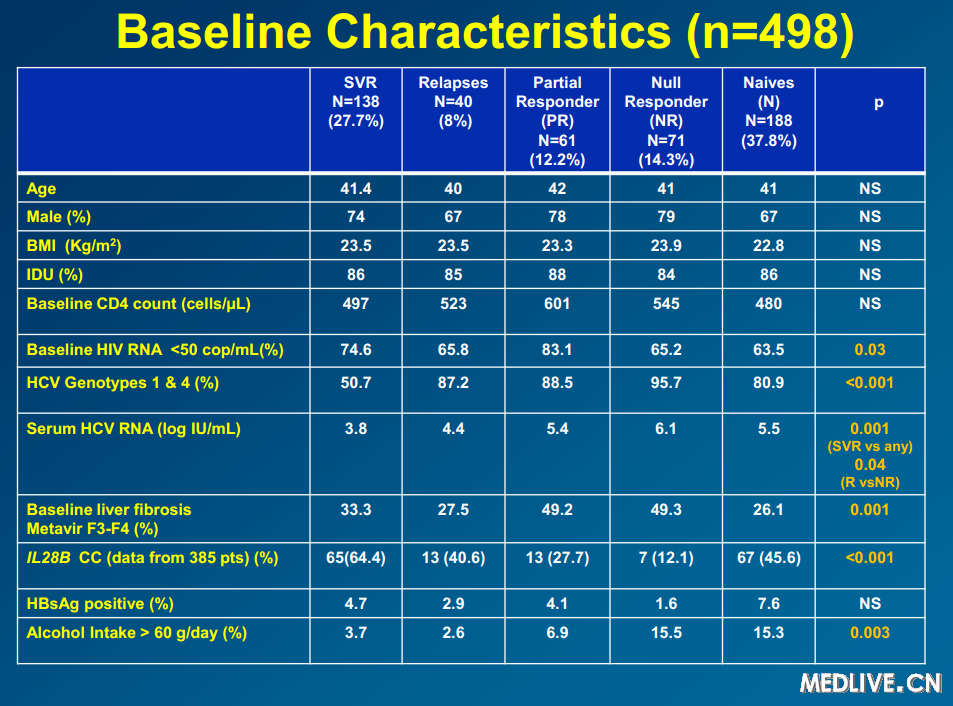
基于对聚乙二醇干扰素和利巴韦林治疗的应答上,患者分为1到5组:持续病毒学应答组,复发组,部分缓解组,无应答者组,初治患者组。
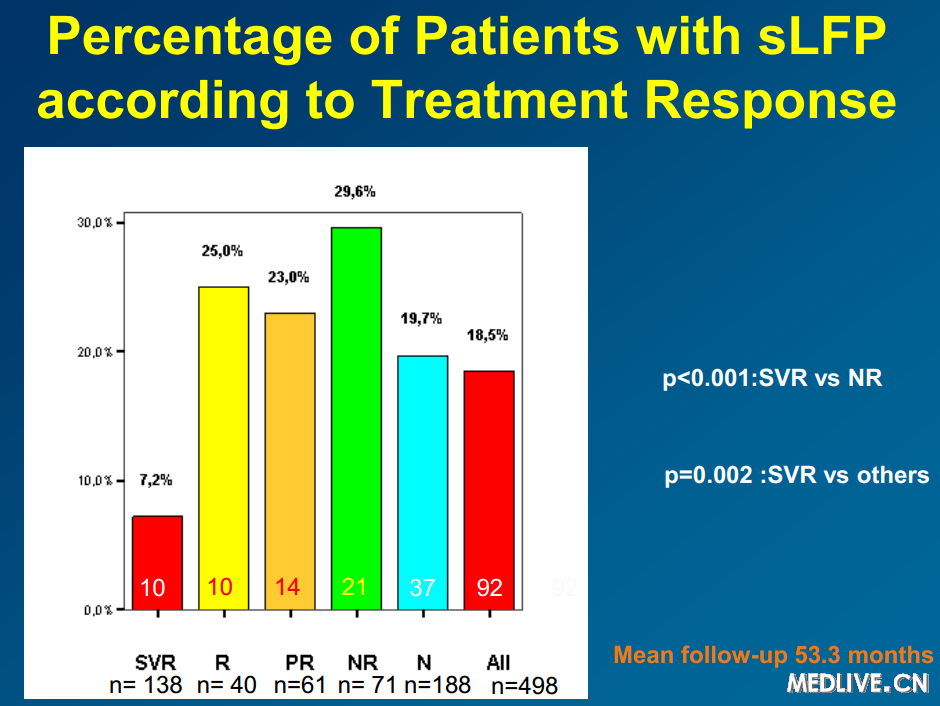
平均随访53个月后,持续病毒学应答者(7.2%)比复发患者(25%;P=0.002),部分应答者(23%;P=0.002),无效者(29.6%;P<0.001),和初治患者(19.7%;P=0.002),较少出现的肝纤维化进展。
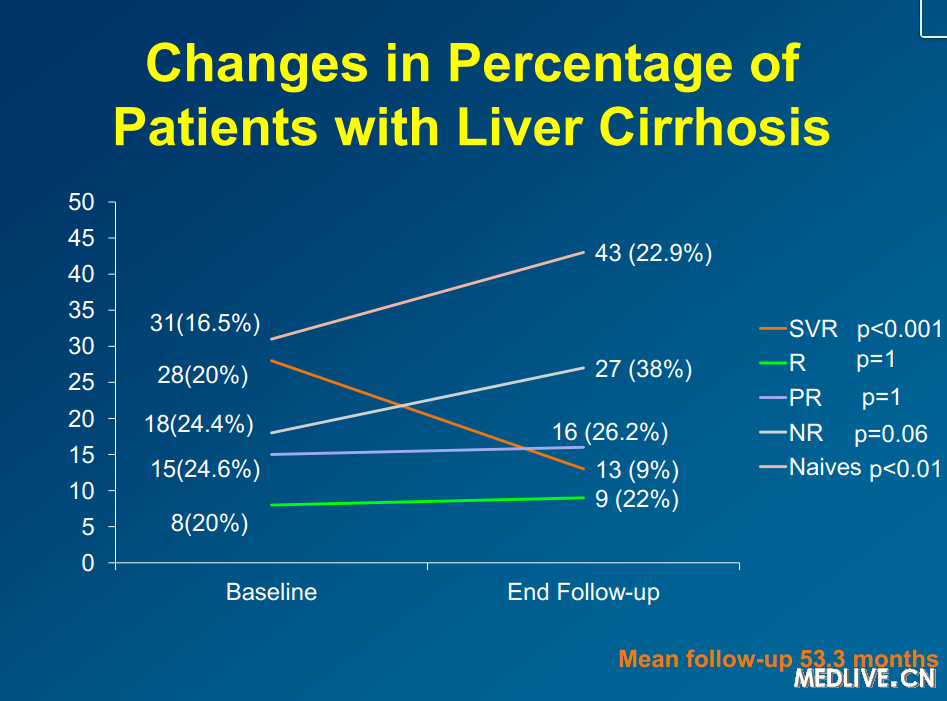
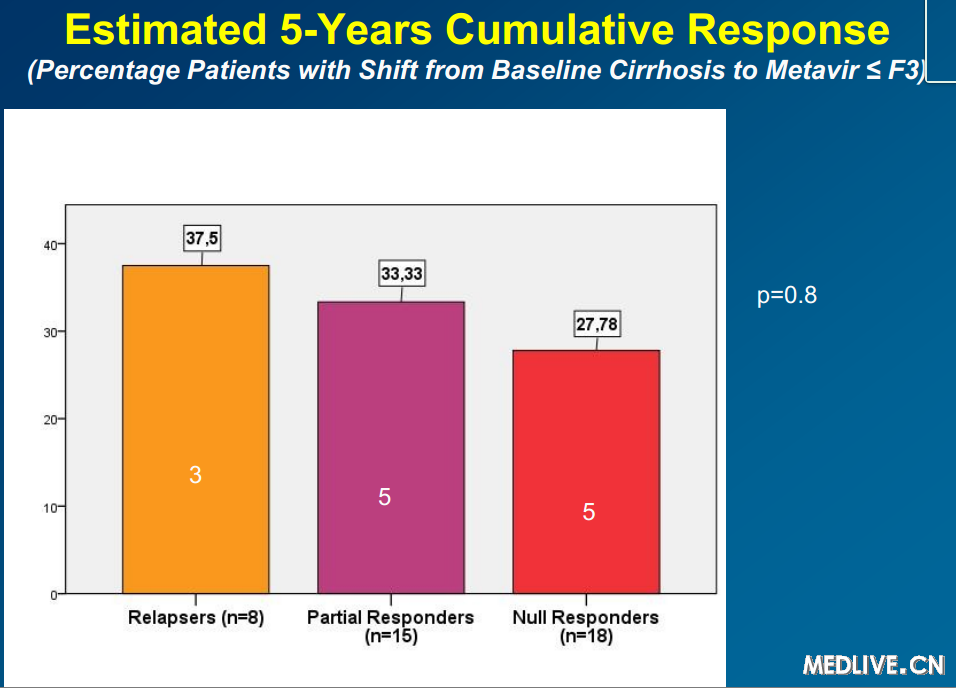
此外,持续病毒学应答率组的肝硬化恢复(11%)比无应答者(2.8%;P=0.04)和初治患者(1.6%;P<0.001)更高。回归到肝纤维化分期f0 F2或减少肝刚度大于30%的持续病毒学应答是更频繁的比处理的NaïVE患者(21.7%比7.4%;P <0。001)。持续病毒学应答者中肝脏硬度显着降低(P<0.001)而在无反应组中增加(P=0.01)。
“这项研究显示了成功治疗丙型肝炎的益处,以及对未来的严重肝脏疾病的潜在的好处,”会议副主席 Mark Nelson医学博士评论道。“这显示出,对于丙型肝炎,迅速而广泛地接受更多的成功的治疗,在降低HIV人群中继发于丙型肝炎-相关肝病的高发病率和死亡率的重要性。”
论文摘要:
论文摘要:
Longitudinal Changes in Liver Fibrosis According to Response to Chronic Hepatitis C Therapy in HCV/HIV Coinfected Patients
Background
There is scarce information about the impact of antiviral treatment on subsequent liver fibrosis outcome in patients with chronic hepatitis C that experience distinct response modalities to peginterferon-ribavirin therapy.
Methods
Retrospective study of a large cohort of HIV/HCVcoinfected patients who had longitudinal assessment of liver fibrosis by elastometry (FibroScan). Patients were split out into five groups according to response to peginterferon/ribavirin treatment: sustained virological response (SVR), relapsers (R), partial responders (PR), null responders (NR) and never treated (naive).Significant Liver fibrosis progression (sLFP) was defined as a shift from baseline Metavir estimates ≤F2 to F3-F4, or by >30% increase in liver stiffness in patients with baseline F3-F4.
Result
【点击查看大图】


Conclusions
Sustained clearance of HCV-RNA following a course of antiviral treatment is the major determinant of liver fibrosis regression in HIV/HCV-coinfected patients.Lack of HCV treatment increase the probability of developing advanced liver fibrosis.